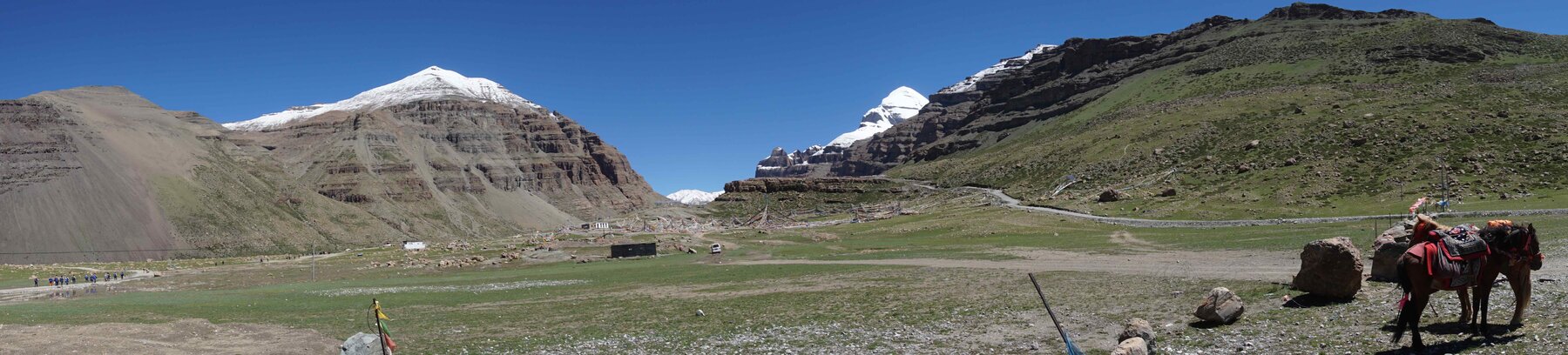
This route is for travelers reaching Kailash and Manasarovar independently of India's government-organized Yatra (the Lipulekh and Nathu La routes) — by booking Chinese/Tibetan permits and travel through a private tour operator instead.
A note on confidence: unlike the India-route pages, almost everything below comes from Tibet/Nepal inbound tour-operator websites, not primary Chinese government sources. Despite repeated searches, no English-language publication from the Tibet Autonomous Region Tourism Bureau, Chinese PSB, or Nepal Tourism Board could be found to directly confirm the permit rules described here. Operators converge on a consistent picture, but they also share a commercial incentive to sound authoritative, and some competing-looking sites may be commonly owned. Treat this page as a reasonable starting point for research, not a substitute for checking directly with a licensed operator before committing to anything.
Permits required
China's Alien's Travel Permit (ATP) requirement was relaxed on some popular Tibet routes starting June 2025 (Everest Base Camp, Nyingchi, Shannan/Samye, the standard G318 highway). The Ngari/Kailash region was explicitly excluded from that exemption and still requires the full permit stack:
- Tibet Travel Permit (TTP) — required to board any flight or train into Tibet, arranged by your agency.
- Alien's Travel Permit (ATP) — issued by the local Public Security Bureau, required for travel beyond Lhasa into Ngari specifically.
- Military Area Entry Permit — issued by the Military Office in Lhasa, because Ngari is a militarily sensitive border region. Plan roughly 30 days ahead for this one; it's the permit most likely to cause delays if booked late.
Independent, unguided travel isn't permitted anywhere in Tibet, and this is enforced particularly strictly in Ngari — every itinerary here runs through a licensed agency that handles the permits and supplies a mandatory guide.
A specific note for Indian passport holders
This is the most sensitive point on this page, and the one most likely to change: Indian passport holders appear to face a distinct, more restrictive booking channel for Kailash specifically, separate from the official MEA/ITBP batch Yatra. Sources describe permits/bookings for Indian passport holders as only obtainable via the Foreign Affairs Office of the Tibet Autonomous Region or a body referred to as the "Pilgrim Center" (Tibet-India Pilgrim Reception Center), booked through a Nepali or Indian agency specifically authorized by those bodies — not general tour operators. Given the sensitivity and the active India-China diplomatic dynamics around the Yatra's resumption, treat this as a starting point for a conversation with a licensed operator, not a confirmed rule, and expect it to be checked and updated as better sourcing turns up.
Typical itinerary
Two entry paths are commonly offered, at roughly 10–17 days (12–13 days is the most common):
- Via Kathmandu — either flying Kathmandu–Lhasa directly, or overland via Syabrubesi to the Kerung (Gyirong) border crossing, then driving via Saga to Lake Manasarovar and Darchen.
- Via mainland China — flying into Lhasa from a hub like Chengdu or Beijing, then overland via Shigatse and Saga into Ngari.
Both converge on the same 3-day Kailash kora over Dolma La pass (~5,600 m) described on the parikrama page.
Cost
Advertised per-person prices cluster loosely around $1,900–$3,200+ USD, which broadly overlaps with or runs somewhat below the India government-batch routes (~$2,400–$4,000). Treat this range as rough: the same operators advertise materially different prices for similarly-named packages, so specific quoted figures should be verified directly with the operator rather than trusted as a benchmark.
Tour operators
Only one operator in this research held up to independent verification: Himalaya Journey Treks & Expedition, a Kathmandu-based agency operating since roughly 1991–92, listed in Lonely Planet and government-registered, offering both a 12–13 day Kathmandu–Kerung–Kailash itinerary and more flexible 10-day-to-one-month variants. This is not a complete or vetted roster — it's the one name that survived scrutiny, not a recommendation to the exclusion of other legitimate operators.
Sources
- tibettourism.com — 2025 ATP exemption policy
- tibettravel.org — permit stack details
- tibetdiscovery.com
- windhorsetour.com
- himalayajourneys.com — itinerary/operator reference